The small curry tree in our garden bloomed for the first time this summer. It was this wonderfully fragrant white umbel with its delicate little petals that inspired me to write something about the subject of curry. When most people think of "curry," they think of the yellow to red spice powder used to sprinkle on curry sausages or cook Indian dishes. But there's so much more to curry!
The Important Facts at a Glance
- Curry is originally an Indian stew, not just a spice.
- Curry powder doesn't exist as such in India; there it's called Masala.
- The curry tree and curry herb are different plants.
- Curry in Ayurveda is valued for its digestive properties.
- The preparation of curry powder involves toasting the spices.
Curry is actually the designation for an Indian "stew."
Pronounced "kari," it is an umbrella term for a regionally very diverse cuisine centered on many variations of sauce (kari) and spice (Masala). Into the pot can go, depending on taste, vegetables, meat, fish, or everything together. Special forms and subtypes of curry are for example: the braised dish "Korma," the vegetable lentil curry "Sambar," and the tomato-based curry sauce "Tikka."
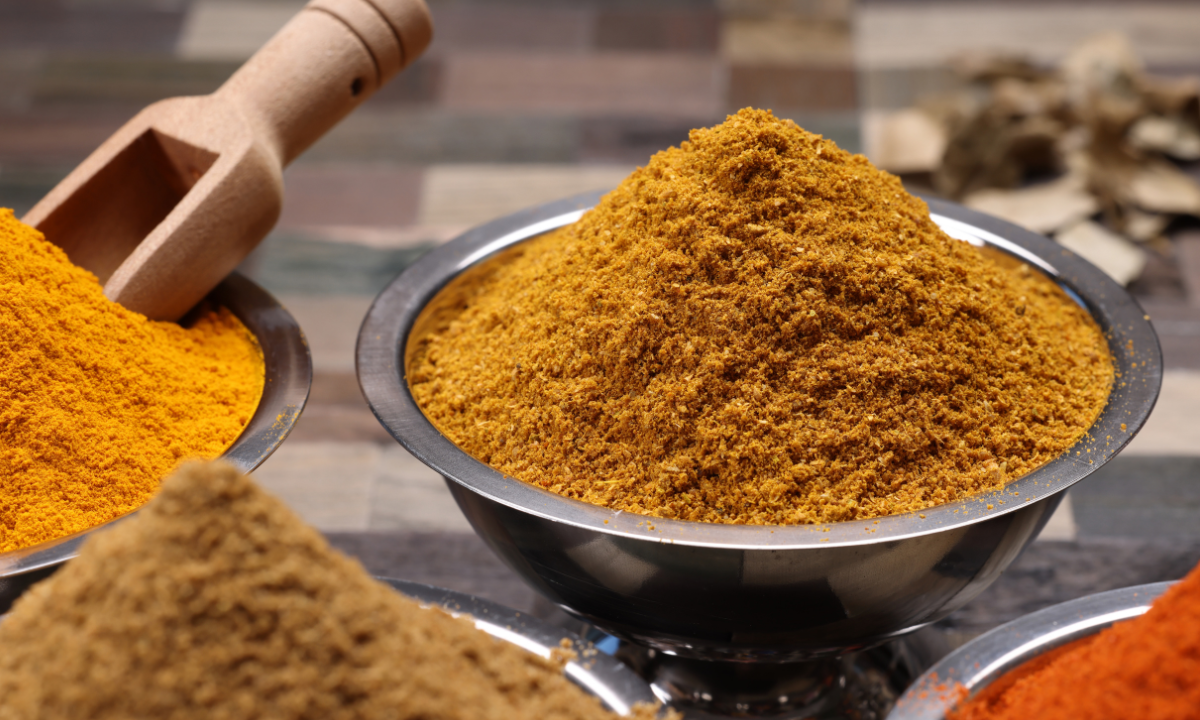
Curry powder should actually be called Masala.
The curry powder known to us does not exist in that form in India. There, every form of spice blend is called "Masala," and there are hundreds of different masalas for special curry dishes to buy. The curry dish itself is prepared differently from family to family. It differs mainly in the respective composition, which consists of the classic spices turmeric, coriander, cumin, fenugreek, ginger, cardamom, mustard, cinnamon plus individual additional "secret ingredients."
Etymology: How Kari Became Curry.
The word "curry" originates in the South Indian language Tamil, spoken in the southeast of India from Tamil Nadu to Sri Lanka. Kari Vempu is the Tamil word for the Asian curry tree. During colonial times, many English people were in South India, who pronounced kari like carree. And since the leaves of the curry tree belonged to many dishes and spice blends, within 100 years kari first became carree and in the 17th century curry. In Europe, curry as a term for Indian stew has only been in use since the mid-19th century.
Curry herb is a culinary and medicinal plant that also thrives in our gardens.
Lat. Helichrysum italicum, also called immortelle, comes from the Mediterranean region. Curry herb grows in our gardens as a perennial culinary herb and handles cold winters well. With proper care, it becomes a bushy, evergreen shrub up to one meter high, which visually resembles rosemary. In naturopathy, both the fresh herb and immortelle oil are used. Here there are recommendations for blood purification, circulation, or arthrosis complaints.
Curry leaves from a tree? Yes, there is a second curry plant
Kari Vempu, lat. Bergera koenigii, is the curry tree that grows in tropical Asia in regions up to 1500 m altitude. In the tropics, Kari Vempu grows up to six meters high; in our latitudes, the curry tree remains at a manageable size of up to one meter. Practical, because it must go indoors in winter as it doesn't tolerate Central European cold well. Now in August it shows its white bloom, which smells exotic and reminiscent of frangipani and coffee shrub flowers.
Cooking with curry herb and curry leaves.
The smell of curry herb and its flowers strongly reminds of the curry spice blend and is responsible for the naming. The fresh twigs are suitable as an ingredient for curry stews, rice, spicy soups, and hearty dishes. The curry leaves from the tree are either dried or fresh, fried in coconut oil or ghee, and then sprinkled over the finished curry stew. In South India this is usually done together with green chilis and mustard seeds. The curry leaves give a vegetable, dhal, or rice dish a fresh, slightly fruity aroma.
The Use of the Curry Tree in Ayurveda.
In Ayurvedic medicine, almost all parts of the curry tree are used; in everyday practice, however, the leaves are usually used. They are considered digestion-harmonizing, which is why daily consumption is appropriate for digestive disorders, bloating, and flatulence. Besides the wonderful taste, this is probably a reason why they are indispensable from South Indian cuisine. Fresh curry leaves are best sprinkled over the food.
Fresh Curry Powder is Gently Toasted Before Cooking.
For a "real" curry, a large part of the individual spice ingredients are freshly ground before being lightly toasted in a hot pan without fat. The aroma draws out the digestive juices and ensures that the digestive fire in Ayurveda, the so-called Agni, is stimulated. When this is active, food can be well digested and completely metabolized.
This is how curry powder is prepared.
Before mixing the individual spices, we roast some of them at low temperature in a large cast-iron pan until the aroma fills the whole house. However, some spices, such as chili powder and asafoetida, should not be roasted as they otherwise become bitter or lose their effectiveness.
Tips for your own curry blend
If you want to prepare your own curry powder blend, add these delicate spices to your finished blend only after the roasting process. If you don't mix in bulk but only need a small amount for the next meal, leave the finished blend directly in the pan. Once a warm, spicy aroma develops, you can add the fat to the pan and begin the actual frying process with fresh ginger, garlic, and the remaining ingredients. Add enough liquid quickly enough so the spice blend doesn't burn in the hot fat!
Curry in Ayurveda: The Main Thing is Balance.
There are countless curry blends and of course Ayurveda has a blend ready too: In Ayurvedic curry, the ingredients are assembled according to the principle of balance. Accordingly, a meal should contain all taste directions to offer the body a balanced, strengthening, and digestive meal. These taste directions are: salty, sweet, bitter, astringent, sour, and pungent.
Conclusion
Now you know enough to answer the question "what exactly is curry?" in detail and above all: to be creative yourself and conjure up delicious curry! Try to create your own individual family curry blend with your own ideas and spices. It's a lot of fun and it's always amazing what delicious things come out of it.