Working with soil and plants can provide the soul with a sense of relief and calm similar to meditation. Hermann Hesse was already aware of the soothing effects of gardening. The attention and care you give to your plants can have a grounding and relaxing effect on your body and mind. Especially now, this season is ideal for creating your own herb garden.
The Essentials at a Glance
- Lavender has a calming and stress-relieving effect.
- Thyme has anti-inflammatory properties.
- Lovage relaxes and relieves cramps.
- Dill is antispasmodic and helps with digestive discomfort.
Lavender
Lavender is known for its calming and balancing effect on body and mind. Lavender, which reduces Vata and Kapha, has a warming effect and can help with sleep problems, nervous restlessness, and migraines. Lavender can also support neuralgia pain, low blood pressure, and congested airways. When planting lavender, choose airy and calcium-rich soils and a warm, sunny location. Lavender needs plenty of water to thrive.
Thyme
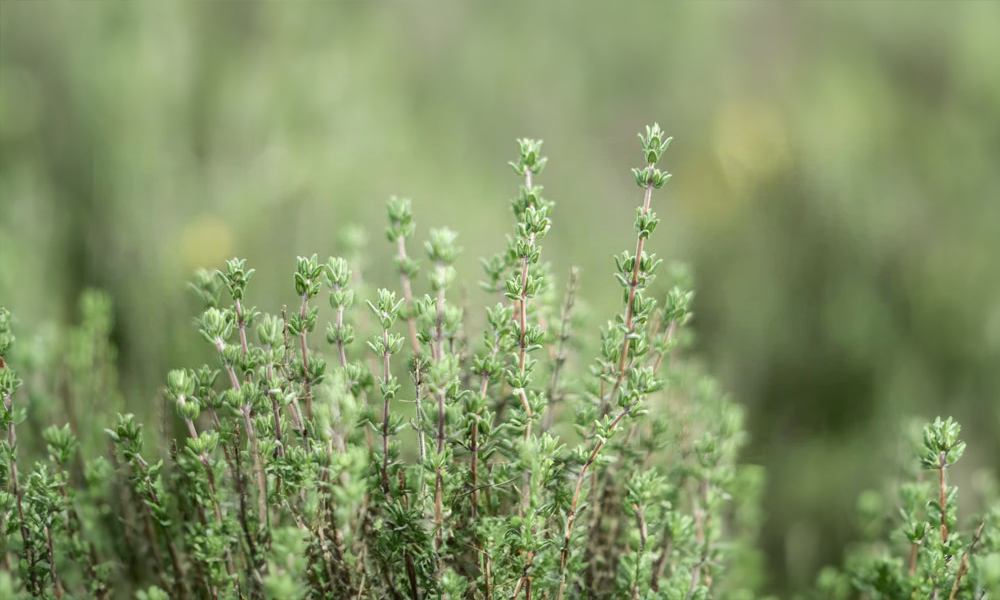
Thyme reduces Vata and Kapha and has anti-inflammatory and muscle-relaxing properties that are useful for colds and respiratory illnesses. Through inhalation, the essential oils in thyme can have a mucus-thinning effect. When planting, ensure that thyme gets enough sun and grows on loose, nutrient-poor soil.
Lovage
Lovage has a characteristic aroma, reduces Vata, and has a relaxing and warming effect. It is suitable for relieving cramps, whether in the stomach, intestines, or urogenital area. Lovage is hardy and thrives even in shade. It grows best in loose and moist soil. It needs plenty of space and is therefore best planted in the garden.
Dill
Dill reduces Vata and Kapha, has a spicy taste, and smells aromatic. Dill has a warming and antispasmodic effect and can relieve stomach and digestive complaints as well as menstrual pain. Dill is also helpful for rheumatic pain. Dill is easy to grow and prefers a semi-shaded location and dry sandy soil.
Conclusion
There are many herbs and plants you can grow in your home herb garden. A balanced diet is important, and no plant should be consumed excessively. For best results, it is advisable to consult with a practicing Ayurveda therapist.