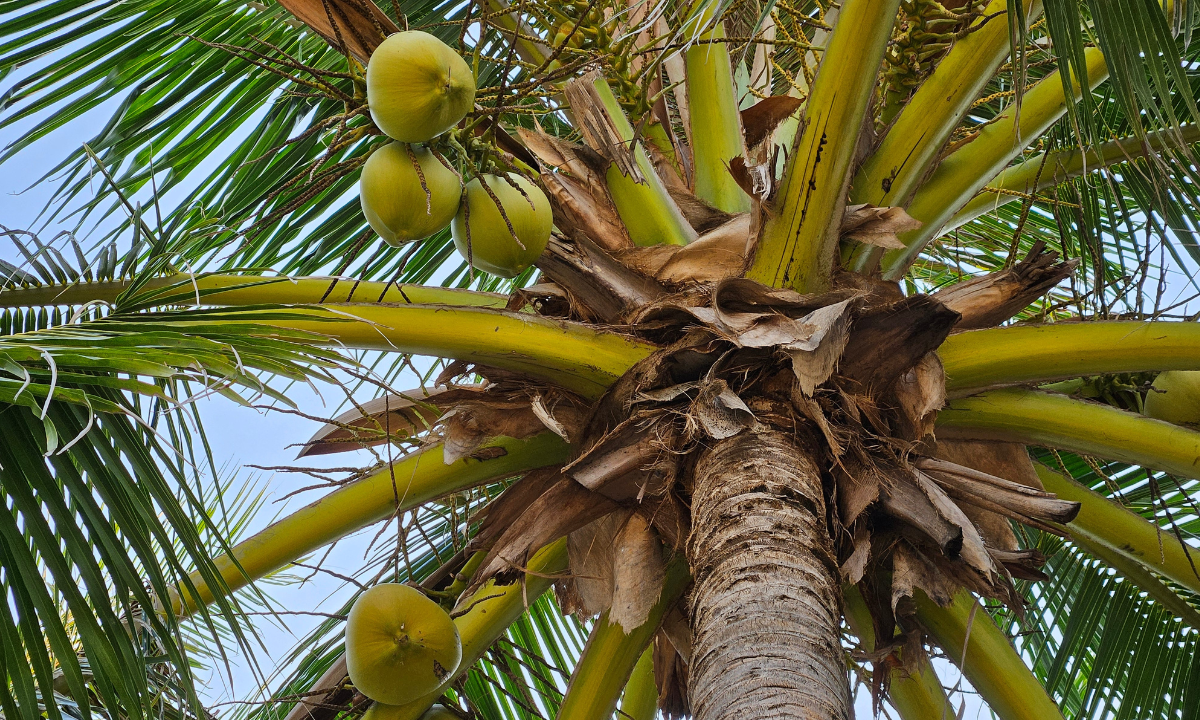
Coconut palms, reaching up to 30 meters high, characterize the landscape of southern India, particularly along the coastal strips of Kerala and Tamil Nadu. Known as Narikela or Nariyal in Sanskrit or Hindi, this tree and its fruit, the coconut, are an important source of high-quality food and the foundation for many Ayurvedic and cosmetic products. From a botanical perspective, the fruit is not a nut but a stone fruit.
The Essential Overview
- Coconut oil has cooling properties and reduces Pitta and Vata.
- Coconut water is an isotonic refreshing drink, rich in minerals.
- The flesh of the coconut is a nourishing strengthening agent.
The Effects of Coconut Products on Health
The oil in particular possesses great therapeutic value. Its Ayurvedic properties are cooling, heavy and oily, with a sweet taste. Thus, coconut reduces Pitta and Vata and is an excellent remedy for all "burning" conditions, both internally and externally. Coconut oil contains a very high proportion of lauric acid.
Against Skin Problems
Extra virgin coconut oil has proven itself as a skin care oil. Whether for sunburn or eczema with reddened skin – the thinly applied oil brings rapid relief.
For Healthy Scalp and Hair Loss
The oil is also suitable for hair care. It soothes itchy, reddened scalp. Regular scalp massage with hand-warm coconut oil is used in Ayurvedic medicine as a proven remedy for preventing or treating existing hair loss. The oil is also used against premature graying of hair.
Against Joint Pain
A very special recipe comes from my first Ayurveda teacher: for joint pain, especially arthritis in the small finger and foot joints, he uses grated fresh ginger or a few drops of essential ginger oil in coconut oil. The joints are massaged with this 1-2 times a day.
Heartburn, Fever and Inflammation of the Urinary Tract
Fresh coconut water mainly relieves "hot" complaints through its Pitta-reducing, cooling property and strengthens the body's own defenses.
Nourishing and Strengthening in Cases of Weakness
During pregnancy, after prolonged illness or weight loss, the valuable flesh of the coconut or the coconut milk derived from it is an excellent strengthening agent.
Products from the Coconut Palm
No tree characterizes the landscape of Southeast Asia more than the coconut palm. Growing around the equator, the tree is utilized in all its parts in its countries of origin.
Coconut Water
The green coconut provides delicious coconut water. This is rich in minerals and a low-calorie, isotonic refreshing drink.
Coconut Milk
The mature nut provides the nourishing flesh, which is scraped from the hard shell with a special metal scraper. When cooked with water and pressed through cloth, it yields thick, fat-rich coconut milk, which is essential for many Asian recipes.
Coconut Flakes
We all know the dried, shredded flesh as an ingredient for delicious Christmas baked goods.
Coconut Flour
Flour made from dried, finely ground flesh is a gluten-free alternative with high protein and fiber content.
Coconut Butter
A special delicacy is coconut butter – the thickened, creamy flesh that refines Asian dishes, smoothies and all kinds of baked goods, or can simply be spread on bread.
Coconut Oil
Coconut oil is pressed from the chopped, dried flesh, the copra, in traditional oil mills without heat application. This mildly aromatic oil is an excellent fat for cooking and baking, care for skin and hair, and the base material for many medicated oils of South Indian Ayurvedic medicine.
Coconut Blossom Syrup
Coconut blossom syrup and crystalline sugar are obtained by tapping and cooking down the sap of the coconut blossom. This dark and highly aromatic syrup contains a variety of vitamins, minerals and amino acids.
The inedible parts of the palm are used to make ropes, mattresses, musical instruments, building or fuel materials.
Coconut Products in the Kitchen
In southern India, coconut flesh is found in many dishes. Particularly delicious is the carrot salad that our friend Raji from Pondy makes from freshly grated carrots, a red onion, lime juice and coconut flakes.
In our kitchen, we use all kinds of coconut preparations. Recently we had basmati rice cooked in rice-coconut milk. Just a pinch of salt and 3 cardamom pods as seasoning and the side dish for vegetables or curry is ready.
Coconut blossom sugar, whether in liquid or crystalline form, has a delicate flavor that tastes slightly of caramel and contains numerous important minerals. Coconut blossom sugar is less sweet than cane sugar and melts immediately on the tongue. It dissolves easily in liquids and is excellent for caramelizing desserts or baked goods.