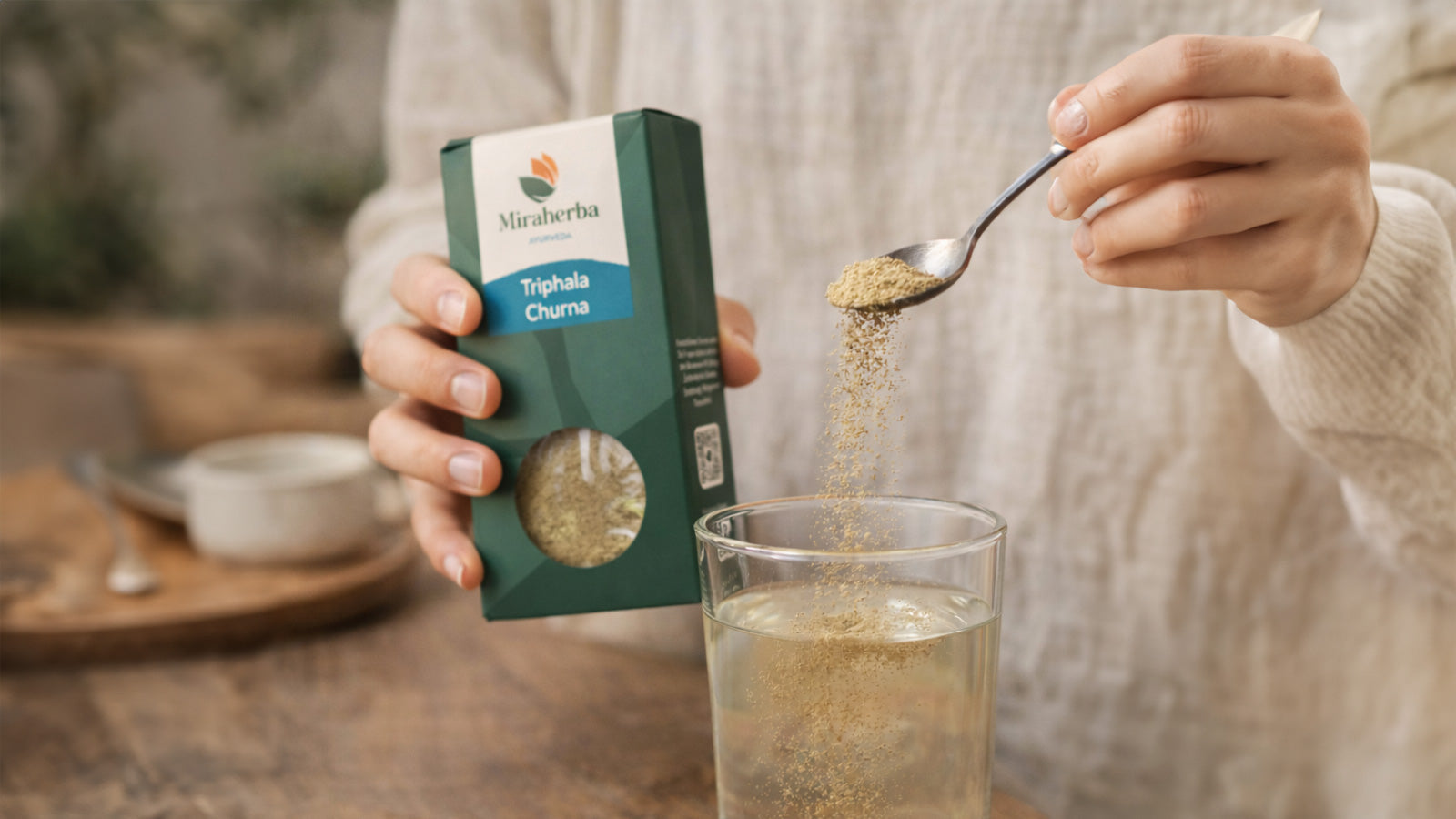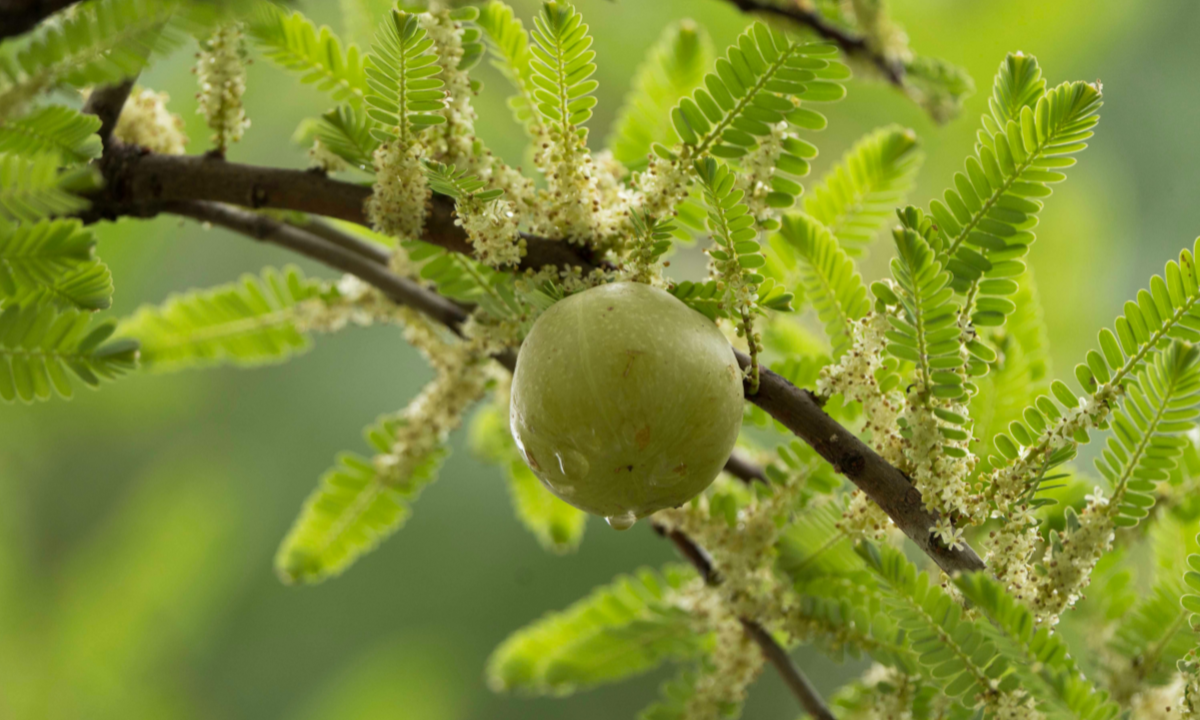
The Amla tree, also known as Amalaki, is native to India and its fruits are used in many Ayurvedic formulations. In the Charaka Samhita, the Amla fruit is described as a panacea and fruit of eternal youth. Together with the myrobalans Haritaki and Bibhitaka, the mixture Triphala is created, which forms the foundation for further highly effective herbal blends.
The Key Points at a Glance
- Amla balances all three Doshas: Vata, Pitta, and Kapha.
- The fruit is rich in vitamin C, iron, and minerals.
- Amla is considered a Rasayana, which acts as a tonic and rejuvenating agent.
- The Amla berry has all flavors except salty.
- Various parts of the tree, such as fruits, seeds, and leaves, are used.
Amalaki - the Amla Tree
The Amalaki is the main ingredient in the spiced Chyavanprash paste, which should be eaten daily. Throughout the markets of India, you can buy the round fruit, which resembles a green gooseberry and in its raw form tastes very sour and has an astringent effect.
Names of Amla
You will encounter this plant under various names, but they all refer to the small green berry.
| Latin | Phyllantus emblica / Emblica Officinalis |
| Hindi | Amla |
| German | Ash-colored myrobalan |
| English | Indian gooseberry |
Properties of the Amla Berry
What are the active constituents of the Amla berry, which Ayurvedic flavors does it contain, and which parts can be used?
| Effect on Doshas | balances all three Doshas V / P / K |
| Rasa / Flavor | all flavors except salty |
| Active constituents | rich in vitamin C, iron, and minerals |
| Used parts | the fruits, seeds, leaves, roots, bark, flowers |
Ayurvedic Effects of the Amla Berry
The Ayurvedic effects of the Amla berry are listed and explained. Here you will learn what the berry can do and what the Sanskrit terms mean in English.
| Rasayana | rejuvenating, tonic |
| Medhya | stimulates psyche and nerves, promotes intellect and memory |
| Anulomana | has an antispasmodic effect on the intestines |
| Dipana | stimulates Agni, promotes digestive fire |
| Mutra-la | diuretic |
| Daha-pra amana | reduces burning sensation |
Ayurvedic Preparations of Amla and Their Application
Here you will find the various preparation methods of the Amla berry and the Sanskrit names explained. You will also learn the common recommendations for use of the various preparations.
| Curna | the dried, ground fruit, 3x1 g daily with warm water |
| Capsules | up to 6 pieces daily |
| Chyavanprash Paste | 1-2 tsp daily with warm milk or water |
| Triphala Guggulu | a preparation with myrrh resin 3x3 daily |
| Triphala Ghrtham | for eye baths |
| Amla Oil | as a hair oil for head massage for hair loss, premature graying, burning and itching |
| Amla Shampoo | for care of sensitive, irritated scalp and hair |