Just in time for the pre-Christmas season, cinnamon is on everyone's mind again. Cinnamon conjures up thoughts of cozy evenings by the fireplace, a fragrant spiced tea in one hand and a cinnamon star in the other. And then there are all the recipes: think of baked apples, mulled punch, gingerbread and Chai. The list of sweet and savory recipes with cinnamon is endless.
But alongside these temptations, you also hear warnings again about too many cinnamon stars and the dangers allegedly lurking in cinnamon. Since nothing unsettles us quite like half-truths, we clarify here what lies behind the statement about "toxic cinnamon", why Ceylon cinnamon is usually the better choice, and what to watch out for with cinnamon during pregnancy.
The Essentials at a Glance
- Ceylon cinnamon and Cassia cinnamon differ significantly in origin, taste and coumarin content.
- Ceylon cinnamon contains significantly less coumarin and is therefore usually considered the better choice.
- Normal amounts of cinnamon are usually unproblematic in everyday use; it becomes critical rather with persistently high amounts.
- During pregnancy and with existing liver or kidney problems, it's worth taking a closer look.
Ceylon Cinnamon vs. Cassia Cinnamon: The Facts
Most people know cinnamon as cinnamon sticks or as an aromatic powder. Less well known is that there are two different types of cinnamon that differ significantly in origin, taste and composition.
In organic shops and specialty stores you usually find Ceylon cinnamon, also called Canehl. It is usually somewhat more expensive, but tastes finer and milder. In many supermarket products and industrially produced foods, on the other hand, Cassia cinnamon is often found, which tastes more robust and is cheaper.
Different plants, different cinnamon
The two types of cinnamon are obtained from the bark of different plants. Ceylon cinnamon comes from Cinnamomum verum, the "true cinnamon tree". Cassia cinnamon is derived from Cinnamomum cassia.
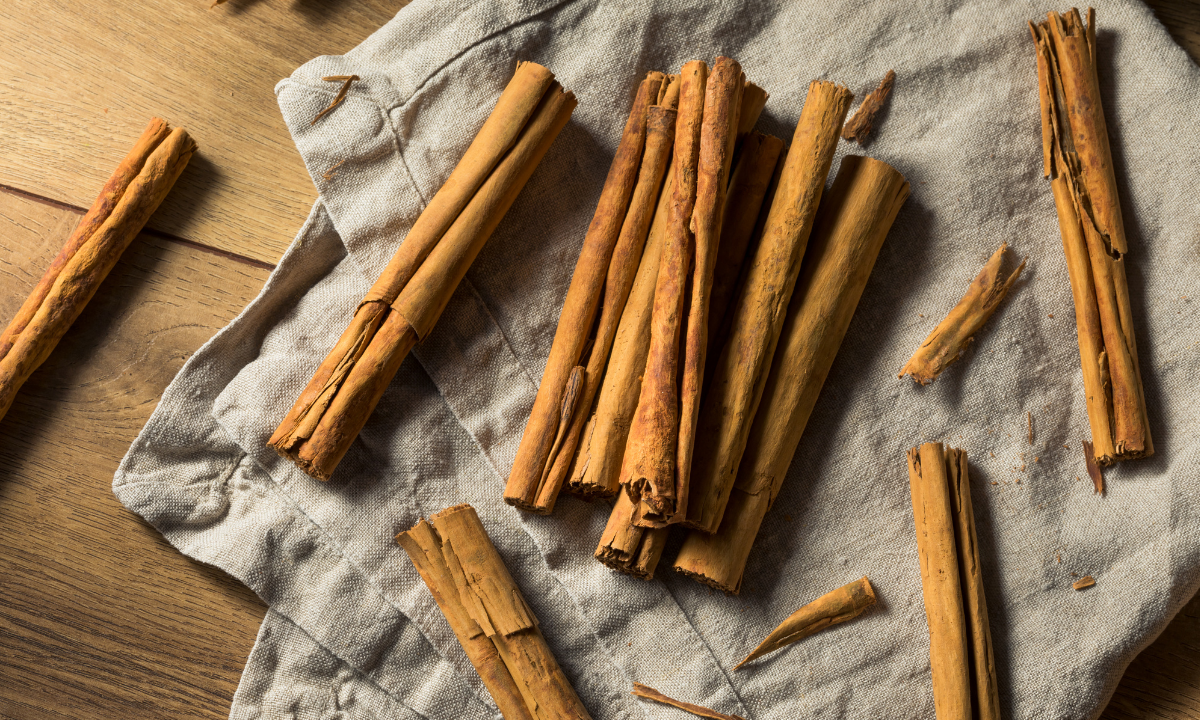
Both varieties can also be distinguished visually: Cassia cinnamon sticks consist of a thick layer of bark and usually don't roll up completely. Ceylon cinnamon looks more like fine puff pastry because many thin layers are rolled together to form a stick.
Origin as an indicator
Ceylon cinnamon traditionally comes mainly from Sri Lanka, but is now also grown in India, Myanmar and Bangladesh. Cassia cinnamon, on the other hand, comes predominantly from China and Indonesia.
If the origin is stated, you can often already get a good sense of which type of cinnamon it is.
Important: If you use cinnamon regularly, you're usually better off with Ceylon cinnamon because it's milder and contains significantly less coumarin.
Coumarin in Cassia Cinnamon: What You Should Watch Out For
The decisive factor in evaluating the two types of cinnamon is the coumarin content. This is a secondary plant compound that is found especially in the outer skin of the Cassia cinnamon tree and gets into the spice when ground.
While Ceylon cinnamon contains only very small amounts, Cassia cinnamon can have significantly higher coumarin levels. In larger amounts, coumarin can cause headaches, dizziness or feeling unwell, among other things.
Coumarin and the liver
Cassia cinnamon, or rather the coumarin it contains, is suspected of being hepatotoxic and kidney-damaging in high amounts. This has been observed mainly in animal tests with very high doses.
For humans: The risk is usually low in normal everyday amounts. It becomes problematic mainly if there are already pre-existing conditions or if very large amounts are consumed over a longer period of time.
Important: This is not about normal everyday amounts, but about persistently high intake or special risk situations.
Why Cassia cinnamon is still often used
Coumarin also contributes to the typical, robust cinnamon aroma. As a result, the flavor in baked goods often remains stable for longer. Together with the cheaper purchase price, this is one reason why Cassia cinnamon is often used in industrially produced Christmas products.
Can You Overdose on Cinnamon?
When assessing the risks, it helps to look at the actual amounts. The Federal Institute for Risk Assessment assumes a tolerable daily dose of 0.1 mg coumarin per kilogram of body weight.
A person weighing 65 kilograms could consume up to 6.5 mg of coumarin per day. This corresponds to about 2.16 g of Cassia cinnamon or around 812 g of Ceylon cinnamon.
The difference is thus enormous. At the same time, the calculation also shows: Even with Cassia cinnamon, it already takes a comparatively large amount to reach a critical range.
An overdose from tea is in principle very unlikely, since a hot water extract significantly reduces the amount of coumarin.
Why many still prefer Ceylon cinnamon
Ceylon cinnamon is considered finer in taste and contains significantly less coumarin. If you use cinnamon regularly or want to shop particularly consciously, you're usually better off with Ceylon cinnamon.
Cinnamon – An Ancient Spice and Remedy
As a spice, cinnamon has been known in Southeast Asia for over 4000 years. While cinnamon was long considered precious, rare and expensive in Europe, it was used early in Ayurveda medicine as a therapeutic.
In ancient Greece, cinnamon was a popular incense, in Egypt it was part of mummification, and the Romans also attributed special properties to it.
Ceylon Cinnamon in Ayurveda
In Sanskrit and in Ayurvedic texts, true cinnamon is known as Tvak or Darusita. In Hindi it is called Dalcini.
Effect on the Doshas
Cinnamon reduces Vata and Kapha and increases Pitta.
Taste (Rasa)
The taste is sweet, bitter and pungent.
Properties (Guna)
The properties are dry, light and sharp.
Cinnamon is a warming spice. It dispels cold and is used in Ayurveda where stimulation is needed. It promotes circulation, has an activating effect, stimulates metabolism and elimination, and is also traditionally valued for its mucus-dissolving properties.
From an Ayurvedic perspective: Cinnamon is particularly interesting when warmth, activation and stimulation are required.
Ayurvedic Cinnamon Recipes
Cinnamon can be used not only aromatically, but also very practically in everyday life. You'll find two classic applications from Ayurveda here.
Ayurvedic Cold Tea
What you need
How to proceed
- Mix spices: Mix cinnamon, cloves and ginger.
- Bring to boil: Add the mixture to 1 liter of water and let everything simmer for about 15 minutes.
- Drink: Drink about 60 ml of it every 3 hours.
What to watch out for
- The mixture is quite strong.
- If needed, you can dilute the portion with hot water.
- The tea is particularly suitable as a warming companion during cold season.
Ayurvedic Honey Paste for Low Blood Pressure
What you need
- 1 knife tip of cinnamon
- 1/2 tsp honey
How to proceed
- Mix: Stir the cinnamon into the honey.
- Apply: Let the mixture dissolve slowly in your mouth.
What to watch out for
- The application is intended for very small amounts.
- It is traditionally used for low blood pressure and tendency to fainting.
- If in doubt or with pre-existing conditions, medical advice is recommended.
Does Cinnamon Help with Diabetes?
With diabetes, cinnamon is often recommended. However, so far there are no sufficiently representative studies that clearly prove a blood sugar-lowering effect of cinnamon in diabetes.
Especially regarding appropriate dosage, there is too little reliable information. Before you attempt any self-experimentation, you should definitely consult with your treating physician.
Important: Uncontrolled blood sugar fluctuations can quickly become uncomfortable or risky in diabetes.
Cinnamon During Pregnancy: What You Should Watch Out For
The good news: During pregnancy, you can generally use cinnamon as a spice or tea ingredient. However, it's important to pay attention to the type and to enjoy cinnamon overall rather moderately.
Cinnamon has labor-inducing properties. Although very large amounts would be necessary in practice, many pregnant women are consciously cautious with consumption. In addition, high amounts of coumarin should be avoided during pregnancy.
You should avoid cinnamon capsules as dietary supplements during pregnancy, as they can contain larger amounts.
Three practical tips
- Prefer Ceylon cinnamon in organic quality. It contains significantly less coumarin than Cassia cinnamon.
- Bake as much as possible yourself. Industrially manufactured Christmas baked goods often use the cheaper Cassia cinnamon.
- Opt for cinnamon sticks instead. If the type is not specified, cinnamon sticks are often the better choice and can be freshly grated.
Even More Cinnamon: Related Plants for the Kitchen
Cassia cinnamon and Ceylon cinnamon are not the only plants with cinnamon-like aroma that play a role in the kitchen or in Ayurveda.
Indian Bay Leaf (Cinnamomum tamala)
The leaf is also called Mother Cinnamon or Indian Bay Leaf. Like other cinnamon varieties, this plant also belongs to the laurel family.
The leaf is reminiscent of bay laurel visually, but is valued in North Indian cuisine for its fine cinnamon-cardamom-clove note. It is particularly common in dishes such as Biryani or Korma.
Its spicy fragrance also unfolds when used as incense. In Ayurvedic medicine you often find it under the name Teipat.
Cinnamon Flowers
Botanically, these are the dried buds of the true cinnamon tree. Visually, they resemble cloves; in taste, they are pungent, sweet and bitter.
They are used in Indian and Oriental dishes, in tea blends, or also as incense.
Frequently Asked Questions
Is Cassia cinnamon fundamentally dangerous?
No. Normal amounts are usually unproblematic in everyday use. The issue becomes relevant mainly with persistently high amounts or if liver or kidney disease already exists.
Can I eat cinnamon during pregnancy?
Yes, in normal amounts as a spice or tea ingredient, usually yes. It's important to use Ceylon cinnamon rather, stay moderate and avoid cinnamon capsules.
Does cinnamon provably help with diabetes?
There is no sufficiently representative study for this so far. Before attempting any self-experimentation, you should definitely seek medical advice.
Conclusion
When it comes to cinnamon, there's often a lot of fuss about things that are actually easy to categorize. If you pay attention to origin, quality and type, you can usually enjoy the spice quite relaxed in normal amounts.
In short: Ceylon cinnamon is usually the better choice because it contains significantly less coumarin and is more refined in aroma. Especially during pregnancy or with existing liver and kidney problems, it's worth taking a closer look.