In recent years, moringa oleifera has been gaining increasing popularity. Recently, its green powder has found its way into European superfood kitchens and smoothies. But what exactly is moringa? Why is it called the miracle tree? What attributes are ascribed to it in Ayurvedic medicine? Learn more about the properties of moringa oleifera, its nutrients, and applications.
The Essential Facts at a Glance
- Moringa oleifera grows quickly and is used for reforestation.
- The leaves are nutrient-rich and are used to combat malnutrition.
- The seeds purify water and contain a stable plant oil.
- Moringa is used in Ayurvedic medicine for many ailments.
Miracle Tree Moringa – Origin and Naming
Due to the pungent-sharp smell of its roots and the use of the root of the young tree as a horseradish substitute, the English called moringa the "horseradish tree". Because its long, fibrous-woody fruits resemble drumsticks, it is also known in English as the "drumstick tree". Due to its diverse effects and applications, the moringa tree, like the castor bean plant, is also called the "miracle tree". In Sanskrit, it is called Sigru or Sobhanjana, and in Hindi, the terms Munga and Sahijan are found.
This tree, which can grow up to 30 meters tall, originates from northern India and grows wild, among other places, along the edge of the Himalaya. Moringa loves hot and dry climates and has since become widespread; it can be found in Africa, Southeast Asia, and the Caribbean, among other places. Its growth rate is enormous! On average, a moringa tree grows 30 centimeters per month. In the first year, a young tree can even shoot up to 8 meters in height. It is no surprise, then, that moringa is often used to reforest deforested woodland areas.
Moringa – More Than Just Green Powder
You can extract much more from moringa than just a green powder made from the nutrient-rich leaves of the tree. In fact, in its mostly tropical and subtropical countries of origin, virtually everything from root to seeds is used.
The Fruits of Moringa
are elongated and slightly woody, which is why they are called "drumsticks" in English. In Indian cuisine, they are often served as a somewhat cumbersome and fibrous pod vegetable in sambar or curry. It takes some practice to open the not particularly generous pod safely and scrape it out with your teeth. The bean-like fruits inside are said to have high nutrient density.
Moringa Leaves
are rarely found on the table as a vegetable. Yet they are the most nutrient-rich parts of moringa oleifera! Due to their very high content of trace elements and nutrients, they are offered not only ground as a powder but also freshly mixed into pastes. In Ayurvedic medicine, they are used to combat malnutrition, anemia, and type 2 diabetes.
Above all, the leaves of moringa oleifera contain a lot of protein (6.7 / 100 g), as well as carotene and vitamins A and C. In addition, there are many minerals such as calcium, iron, and potassium. Especially for vegan diets, the powder is a valuable source of protein and iron!
The Seeds of moringa oleifera
are natural water purifiers! Scientists at the University of Leicester discovered that ground seeds of the moringa tree can turn muddy river water into drinking water within an hour. Why? The seeds bind bacteria and viruses to themselves and thereby purify the water without harmful side effects for plants, animals, and humans. The seeds contain one of the most stable and long-lasting plant oils available. Moringa oil was even used for a long time in European watchmaking as a high-class lubricating oil (until it was replaced by cheap palm oil).
The Roots of the Moringa Tree
have a very high content of sharp essential oils. Only the roots of young trees are suitable for consumption. When applied externally, both the seeds and roots in the form of compresses or pastes can relieve pain from gout or rheumatism.
Ayurvedic Properties of Moringa oleifera
The fresh root and seeds of the moringa tree are strongly Pitta-increasing. Its bitter-sharp and heating properties have a positive effect on elevated or imbalanced Doshas. Thus, moringa oleifera is used in Ayurvedic medicine in the form of powders, teas, root pastes, syrups, and oils as a Kapha- and Vata-reducing agent.
Important: The strongly Pitta-increasing properties of roots and seeds can lead to skin irritation. When used internally, excessive use of roots and seeds can lead to miscarriage and possible reduction in seed quality. Therefore, use during pregnancy is strongly advised against!
The Use of Moringa in Ayurvedic Medicine
Ayurveda attributes healing power to the moringa tree for up to 300 different ailments and diseases. Below, we summarize some of its most important areas of use: Due to its anti-inflammatory, detoxifying, and analgesic properties, moringa has an overall positive effect on the immune system. Similar to the medieval scent bottle, the pungent smell of the horseradish tree has a nerve-toning effect on fainting, dizziness, and headaches. When taken regularly, moringa can have a positive influence on the cardiovascular system; it is anti-inflammatory, heart-strengthening, and works hyper-tonically for low blood pressure and slow pulse. When reduced to a syrup, it reduces and dissolves mucus in the airways.
Examples of Ayurvedic Preparations and Applications
|
Curna (Herbal Powder) |
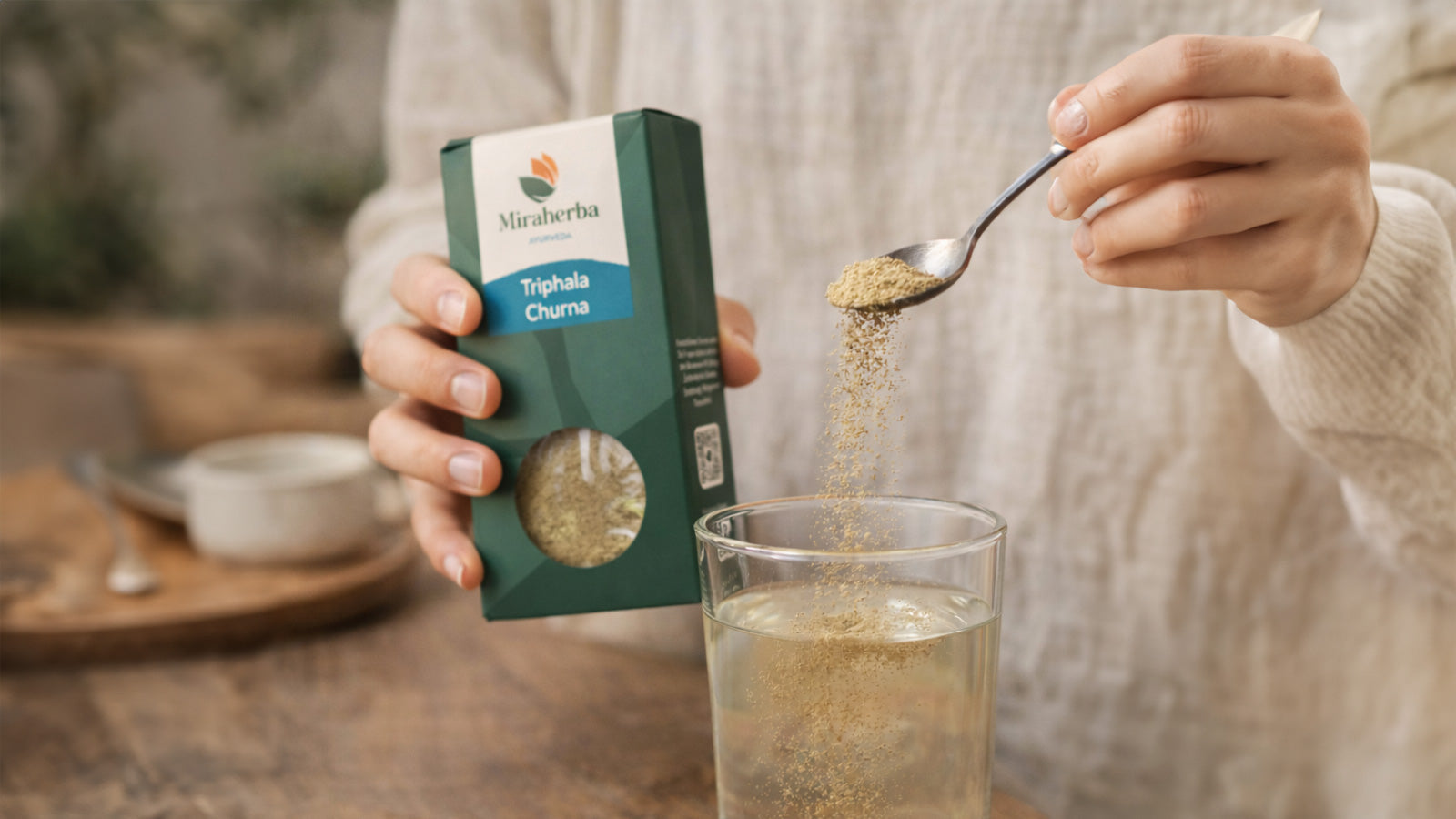
Has anti-inflammatory, digestive-promoting, and immune-stimulating effects. Rich in antioxidants: Take dried, ground moringa leaves three times (1-3 g each) daily with warm water or in a smoothie with as much green leafy vegetables or beets as possible. |
|
Nasja (Nasal Drops) |
For mucus congestion: Mix moringa seeds with water and apply as nasal drops. |
|
Lepa (Paste) |
For bronchial complaints and to stimulate circulation: Apply compresses with a paste made from fresh leaves or moringa powder and sesame oil or mustard oil. |
Conclusion
Moringa oleifera offers an impressive variety of applications and health benefits. From promoting nutrition to supporting medical treatments in Ayurvedic medicine, this miracle tree has much to offer. Nevertheless, you should pay attention to its strongly Pitta-increasing properties and be accordingly cautious in its application.