Miraherba Blog

Ayurveda im Sommer: Was wirklich hilft, um abzukühlen
Der Sommer bringt lange Tage, warme Abende und viel Licht. Gleichzeitig kann genau diese Jahreszeit den Körper und die Sinne fordern: Hitze, volle Termine, intensive Sonne, scharfes Essen oder zu wenig Pausen können sich schnell als innere Unruhe, Gereiztheit, empfindliche Haut oder ein „heißer Kopf“ bemerkbar machen. Im Ayurveda wird der Sommer vor allem mit dem Pitta-Dosha verbunden. Pitta steht für Feuer, Stoffwechsel, Klarheit, Tatkraft und Transformation. Ist zu viel davon im Spiel, fühlt sich der Alltag manchmal weniger leicht an, als der Sommer eigentlich sein sollte. Die gute Nachricht: Um Pitta zu beruhigen, braucht es keine komplizierten Programme. Oft reichen kleine, regelmäßige Impulse: mildere Mahlzeiten, kühlende Kräuter, lauwarme Getränke, bewusste Pausen und eine ruhige Abendroutine. Das Wichtigste auf einen Blick Im Sommer kann laut Ayurveda das Pitta-Dosha leichter ansteigen. Sanft kühlende Routinen sind besser als extreme Gegensätze wie eiskalte Getränke. Leichte, saftige und milde Speisen passen besonders gut in warme Tage. Kräuter wie Minze, Hibiskus, Rose, Koriander und Fenchel gelten im Ayurveda als wohltuende Sommerbegleiter. Ruhige Morgen- und Abendroutinen helfen, die Sommerenergie besser zu regulieren. Warum der Sommer laut Ayurveda Pitta verstärkt Im Ayurveda wird alles über Eigenschaften betrachtet: heiß oder kühl, leicht oder schwer, trocken oder ölig, ruhig oder beweglich. Der Sommer bringt von Natur aus viel Wärme, Licht und Intensität mit. Genau diese Eigenschaften passen zu Pitta. Pitta ist wichtig: Es unterstützt Verdauung, Stoffwechsel, Konzentration, Zielstrebigkeit und klare Entscheidungen. Doch wenn zu viel Hitze dazukommt, kann dieses Prinzip aus dem Gleichgewicht geraten. Dann fühlt sich der Sommer nicht mehr nur aktivierend an, sondern eher reizvoll, überladen oder erschöpfend. Typische Pitta-Verstärker im Sommer intensive Sonne und große Hitze scharfe, saure oder sehr salzige Speisen Alkohol, viel Kaffee oder sehr späte Mahlzeiten Stress, Zeitdruck und volle Tage ohne Pausen zu viel Ehrgeiz oder Perfektionismus Ayurveda-Merksatz Gleiches verstärkt Gleiches. Wenn der Sommer heiß, intensiv und aktiv ist, braucht Pitta vor allem Kühle, Milde, Ruhe und Regelmäßigkeit. Woran du ein erhöhtes Pitta im Alltag erkennen kannst Ein erhöhtes Pitta zeigt sich nicht bei allen Menschen gleich. Manche merken es körperlich, andere eher emotional oder mental. Mögliche Zeichen können sein: Körperliche Hinweise du schwitzt stärker als sonst, deine Haut reagiert empfindlicher, du fühlst dich schneller überhitzt, du sehnst dich nach Frische und Leichtigkeit. Mentale Hinweise du bist schneller gereizt oder ungeduldig, dein Kopf fühlt sich sehr aktiv an, du willst alles besonders effizient erledigen, du hast weniger Geduld mit dir und anderen. Ayurveda setzt hier nicht auf Extreme, sondern auf Ausgleich. Hitze wird nicht mit Eiseskälte beantwortet, sondern mit sanfter Kühle, Regelmäßigkeit und Entlastung. 1. Iss leicht, saftig und mild Im Sommer darf die Ernährung einfacher werden. Statt schwerer, sehr fettiger oder stark gebratener Gerichte tun oft leichte, saftige und gut verträgliche Mahlzeiten gut. Das passt gut in warme Tage Gurke, Zucchini und grünes Blattgemüse Reis, Mung Dal und leichte Gemüsegerichte milde Suppen oder Bowls Kokos, reife süße Früchte und frische Kräuter Miraherba Bio Kitchari Green als unkomplizierte Ayurveda-Mahlzeit Das lieber reduzieren Chili, Cayenne und sehr scharfe Gewürzmischungen sehr saure Speisen, Essig und viel Zitrus stark frittierte oder sehr fettige Mahlzeiten zu viel Kaffee oder Alkohol sehr salzige Snacks 2. Trinke kühlend – aber nicht eiskalt Ein häufiger Irrtum: Im Sommer braucht der Körper möglichst eiskalte Getränke. Im Ayurveda wird das differenzierter gesehen. Sehr kalte Getränke können die Verdauung belasten, besonders wenn sie direkt zu den Mahlzeiten getrunken werden. Besser sind Getränke, die sanft kühlen: zimmerwarm, lauwarm oder leicht abgekühlt. Kräutertees, Blütenaufgüsse oder Wasser mit frischen Kräutern sind ideal, wenn sie nicht direkt aus dem Kühlschrank kommen. Mein Tipp: Bereite deinen Tee morgens zu, lass ihn nach dem Ziehen abkühlen und trinke ihn über den Tag verteilt. So entsteht ein sommerliches Getränk, das frisch wirkt, ohne den Körper mit extremer Kälte zu reizen. Besonders sommerlich sind Hibiskusblüten, Nana-Minze, Pfefferminzblätter und Zitronenverbene. 3. Nutze kühlende Kräuter und Gewürze Kräuter und Gewürze sind im Ayurveda kleine Alltagshelfer. Sie bringen Geschmack, Struktur und bewusste Wirkung in die Küche, ohne dass die Routine kompliziert werden muss. Kühlende Sommerkräuter Minze: frisch, klar und ideal für Sommertees oder Wasser mit Kräutern. Hibiskus: fruchtig-säuerlich und schön für abgekühlte Aufgüsse. Rose: im Ayurveda traditionell mit Sanftheit und Ausgleich verbunden. Zitronenverbene: hell, frisch und angenehm für warme Tage. Milde Sommergewürze Fenchel: mild-süßlich und gut für Tee oder leichte Küche. Koriander: ein klassisches Gewürz für sommerliche Ayurveda-Gerichte. Kardamom: aromatisch, rund und fein dosiert auch in Sommergetränken angenehm. Pitta Balance Churna: eine praktische Mischung zum milden Würzen. Für deine Küche passt auch Miraherba Bio Pitta Balance Churna. Die milde Gewürzmischung eignet sich zum Kochen oder Nachwürzen, wenn du im Sommer bewusster und weniger scharf würzen möchtest. 4. Würze milder und reduziere Schärfe Schärfe bringt Wärme. Das kann in kalten Monaten wunderbar sein, im Sommer aber schnell zu viel werden. Wenn du merkst, dass du innerlich aufgeheizt bist, darf Chili für eine Weile in den Hintergrund treten. Statt sehr scharfer Gewürze kannst du milder würzen: mit Koriander, Fenchel, Kardamom, etwas Kurkuma, kleinen Mengen Kreuzkümmel oder frischen Kräutern. So bleibt das Essen aromatisch, ohne zusätzlich zu erhitzen. Einfacher Alltagstausch: Ersetze Chili oder viel Pfeffer durch Koriander, Fenchel oder eine milde Pitta-Gewürzmischung. So bleibt dein Essen würzig, aber sommerfreundlicher. 5. Kühle über die Haut – sanft und regelmäßig Ayurveda betrachtet nicht nur Ernährung, sondern auch die Pflege des Körpers. Im Sommer können sanfte Anwendungen helfen, zur Ruhe zu kommen und die Haut bewusster wahrzunehmen. Eine leichte Selbstmassage mit einem passenden Öl, eine lauwarme Dusche oder eine kühlende Gesichtspflege am Abend können den Tag angenehm abrunden. Wichtig ist auch hier: nicht extrem kalt, sondern sanft ausgleichend. Sommerliche Selfcare-Ideen lauwarm duschen statt eiskalt abduschen Gesicht und Nacken bewusst pflegen abends eine kleine Fußmassage einbauen nach intensiven Tagen früher zur Ruhe kommen Selfcare-Tipp Die Miraherba Ayurveda Rote Pitta Gesichtsmaske passt gut zu einer bewussten Abendroutine, wenn sich deine Haut nach Ruhe und einer kleinen Pflegepause sehnt. 6. Plane Aktivität zur richtigen Tageszeit Im Sommer ist nicht nur wichtig, was du tust, sondern auch wann du es tust. Die heißeste Zeit des Tages ist für intensive Aktivitäten oft weniger ideal. Bewegung, Sport oder längere Spaziergänge passen besser in den frühen Morgen oder in den Abend. Die Mittagszeit darf leichter werden: eine einfache Mahlzeit, ein kurzer Moment im Schatten, weniger Bildschirmzeit oder ein paar ruhige Atemzüge können helfen, nicht in die volle Sommerintensität hineinzurutschen. 7. Beruhige den Geist mit kleinen Pausen Pitta ist nicht nur körperliche Hitze. Auch Ehrgeiz, Perfektionismus, Ungeduld und ein sehr aktiver Kopf gehören zu diesem Prinzip. Deshalb ist mentale Kühlung im Sommer genauso wichtig wie kühlende Kräuter. Kleine Pausen, die Pitta guttun bewusst und langsamer essen den Blick ins Grüne richten eine kurze Pause ohne Handy machen am Abend einen Tee trinken, ohne nebenbei zu arbeiten Kühlende Sitali-Atmung Setz dich bequem und aufrecht hin. Rolle die Zunge zu einem kleinen Röhrchen. Falls das nicht geht, forme die Lippen leicht wie beim Trinken durch einen Strohhalm. Atme langsam durch den Mund ein. Schließe den Mund und atme ruhig durch die Nase aus. Wiederhole die Übung für 6 bis 10 Atemzüge. Übe sanft und ohne Druck. Wenn sich die Atmung unangenehm anfühlt, kehre einfach zu deinem natürlichen Atem zurück. Rezept: Kühlender Pitta-Sommertee Dieser Sommertee ist leicht, blumig und frisch. Du kannst ihn warm trinken oder nach dem Ziehen abkühlen lassen. Im Ayurveda ist er besonders angenehm, wenn er nicht eiskalt, sondern sanft temperiert getrunken wird. Kühlender Pitta-Sommertee Für warme Tage, an denen du dir Frische und Ruhe wünschst. Das brauchst du 1 TL Hibiskusblüten 1 TL Rosenblüten 1 TL Nana-Minze oder Pfefferminze ½ TL Fenchelsamen optional etwas Zitronenverbene ca. 750 ml heißes Wasser Schritt für Schritt Kräuter und Blüten in eine Kanne geben. Mit heißem Wasser übergießen. 8 bis 10 Minuten ziehen lassen. Abseihen und lauwarm oder leicht abgekühlt genießen. Extra-Tipp: Für mehr Sommerfrische kannst du ein paar frische Minzblätter oder eine Gurkenscheibe ins Glas geben. Verzichte aber besser auf Eiswürfel direkt nach dem Essen, wenn deine Verdauung empfindlich reagiert. Eine einfache Pitta-Routine für heiße Tage Ayurveda wirkt im Alltag am besten, wenn es einfach bleibt. Diese kleine Routine braucht wenig Zeit und lässt sich gut in warme Sommertage integrieren: Morgens Starte mit einem Glas lauwarmem Wasser. Bewege dich sanft, zum Beispiel mit leichtem Yoga oder einem Spaziergang. Wähle ein mildes Frühstück, zum Beispiel Porridge mit Kardamom oder reife Früchte. Mittags Iss die Hauptmahlzeit möglichst in Ruhe. Setze auf Reis, Dal, Gemüse oder ein leichtes Kitchari. Würze mild statt scharf. Abends Reduziere Bildschirmzeit und starke Reize. Trinke einen milden Tee oder einen abgekühlten Kräuteraufguss. Gönn dir eine kurze Pflegepause, zum Beispiel mit einer Gesichtsmaske oder einer sanften Fußmassage. Passende Ayurveda-Begleiter für deine Sommer-Routine Für warme Tage eignen sich Produkte, die die Pitta-Routine alltagstauglich machen: kühlende Tees, milde Gewürze, leichte Mahlzeiten und sanfte Selfcare. Tee & Kräuter Miraherba Bio Pitta Tee, kühlend und beruhigend Miraherba Bio Hibiskusblüten Miraherba Bio Nana-Minze Miraherba Bio Eisenkraut / Zitronenverbene Küche & Selfcare Miraherba Bio Pitta Balance Churna Miraherba Bio Kitchari Green Miraherba Ayurveda Rote Pitta Gesichtsmaske Miraherba Pitta Balance Set Häufige Fragen Was bedeutet Pitta im Ayurveda? Pitta ist eines der drei Doshas im Ayurveda. Es steht für Feuer, Stoffwechsel, Verdauung, Klarheit, Fokus und Transformation. Im Sommer kann Pitta durch Hitze, Sonne, scharfe Speisen oder Stress leichter ansteigen. Welche Lebensmittel passen im Sommer besonders gut? Gut passen leichte, saftige und milde Lebensmittel wie Gurke, Zucchini, Blattgemüse, Reis, Mung Dal, Kokos, reife süße Früchte und einfache Gemüsegerichte. Auch Kitchari ist eine gute Option, wenn du warm, leicht und unkompliziert essen möchtest. Welche Lebensmittel sollte ich bei viel Hitze eher reduzieren? Bei starkem Hitzegefühl können sehr scharfe, saure, salzige, frittierte oder stark erhitzende Speisen Pitta zusätzlich verstärken. Dazu gehören zum Beispiel Chili, Cayenne, viel Knoblauch, sehr saure Dressings, Alkohol oder stark Gebratenes. Sind eiskalte Getränke im Ayurveda empfehlenswert? Im Ayurveda werden eiskalte Getränke eher zurückhaltend betrachtet, weil sie die Verdauung belasten können. Sanfter sind zimmerwarme, lauwarme oder leicht abgekühlte Getränke mit Kräutern wie Minze, Hibiskus, Fenchel oder Zitronenverbene. Welche Kräuter gelten im Sommer als besonders wohltuend? Besonders gut passen im Sommer Minze, Hibiskus, Rose, Fenchel, Koriander, Kardamom und Zitronenverbene. Sie lassen sich einfach als Tee, Blütenaufguss, Gewürz oder frische Ergänzung in die Sommerküche integrieren. Was hilft abends, wenn der Tag sehr heiß und intensiv war? Eine ruhige Abendroutine kann helfen: ein lauwarmer Kräutertee, weniger Bildschirmzeit, eine lauwarme Dusche, sanfte Atemübungen oder eine kleine Selfcare-Anwendung. Wichtig ist, den Tag bewusst weicher ausklingen zu lassen. Fazit: Sommer braucht keine Extreme, sondern Balance Ayurveda im Sommer bedeutet nicht, alles zu vermeiden, was Freude macht. Es geht darum, bewusster mit Hitze, Intensität und Aktivität umzugehen. Kleine Entscheidungen können viel verändern: milder würzen, leichter essen, nicht eiskalt trinken, Pausen setzen und den Abend ruhiger gestalten. So wird Ayurveda zu dem, was es im Alltag sein darf: eine einfache, wohltuende Orientierung. Nicht kompliziert, nicht streng, sondern ein verlässlicher Begleiter für mehr Leichtigkeit, Kühle und Balance in warmen Tagen. Hinweis: Die beschriebenen Ayurveda-Tipps dienen der allgemeinen Orientierung und ersetzen keine medizinische Beratung. Bei anhaltenden oder starken Beschwerden ist eine ärztliche Abklärung sinnvoll.
Learn more
Home Remedies for Seasonal Allergies in Ayurveda
Seasonal allergies can become a real challenge during the beautiful spring and summer months. When nature is in full bloom, many people suffer from symptoms such as sneezing, itching, and a runny nose. But what exactly are seasonal allergies and how can they be supported with Ayurveda? In this article, I'll introduce you to practical Ayurvedic approaches that can help you get through the allergy season more easily. We'll also look at which triggers play a role in different seasons, which year-round allergens frequently cause discomfort, and how Ayurveda can provide targeted support. The Most Important Points at a Glance Seasonal allergies are caused primarily by pollen, while year-round discomfort is often caused by household dust, mites, feathers in bedding, or mold in indoor spaces. In Ayurveda, allergies are viewed as an imbalance of the Doshas, especially Kapha and Pitta. Natural remedies such as turmeric, ginger, and Tulsi can be soothing in daily life. Helpful routines include oiling the nose in the morning, nasal rinses with a Neti pot in the evening or after being outdoors, and inhalations with Ajowain. During heavy pollen season, simple measures such as wearing sunglasses and mindful eye care can provide additional relief. What are seasonal allergies? Seasonal allergies, also known as hay fever, occur when the immune system overreacts to pollen from trees, grasses, or weeds. These pollens are especially present in the air during spring and summer. In Germany, hay fever season typically extends from February through October, with the main season for many allergy sufferers lasting from April to August. Early bloomers such as hazel and alder often start as early as January or February, while grass pollens are particularly prevalent from May through August. Important pollen season overview: January – April (Early bloomers): Hazel, alder, followed from March/April by birch, ash, and oak. May – August (Main season): Grasses and cereals such as rye. July – October (Late bloomers): Mugwort and ragweed. In addition to seasonal triggers, there are also year-round allergens that burden many people. These include primarily household dust, mites, and components from pillows and bedding such as feathers. Mold spores in indoor spaces can also cause discomfort throughout the year and have nothing to do with fungi found in forests. In Ayurveda, these complaints are understood as an expression of an imbalance in the body that is intensified by external stimuli. Kapha, which is associated with mucus and moisture, and Pitta, which is linked to heat, irritation, and inflammatory processes, are particularly often affected. Ayurvedic Treatment of Allergies Ayurvedic support aims to bring the Doshas into balance and support the body in dealing with external stimuli. Here are some proven Ayurvedic approaches that integrate well into everyday life: 1. Turmeric to support inflammatory processes Turmeric contains curcumin and is traditionally highly valued in Ayurveda. You can incorporate turmeric into your daily diet or enjoy it as golden milk. To prepare it, mix a teaspoon of turmeric into warm milk or plant-based drink and add honey if desired. 2. Nasal oiling as protection in the morning Gently oiling the nose is a proven Ayurvedic routine, especially during allergy season. Particularly in the morning before you go outside, some suitable nasal oil or a dedicated Ayurvedic oil can help keep the nasal mucosa supple and protect it from external irritants. 3. Nasal rinse with a Neti pot A nasal rinse with a Neti pot can help remove pollen and other irritants from the nose. It is particularly useful as a preventive measure during stressful periods, in the evening, or when you come back inside from outdoors. The pot is filled with lukewarm salt water and the nose is gently rinsed. 4. Inhalation with Ajowain Inhalation with Ajowain can also be experienced as soothing in Ayurvedic practice when the airways are strained. For this, the seeds are poured over with hot water and the rising vapors are gently inhaled. Always maintain a comfortable distance so that the mucous membranes are not additionally irritated. 5. Ginger against a heavy, congested feeling Ginger has a warming effect and is traditionally used in Ayurveda to reduce Kapha and support easier breathing. Prepare a simple tea by steeping fresh ginger slices in hot water. Drink this tea warm throughout the day. 6. Tulsi as a daily companion Tulsi, also called holy basil, is highly valued in Ayurveda. As a tea, Tulsi can be a soothing addition to everyday life, especially during times when the body reacts more strongly to environmental stimuli. 7. Sunglasses during heavy pollen season Sunglasses can be quite practical during heavy pollen season because they protect the eyes somewhat from flying pollen. Especially on windy days or during walks in nature, this can be a simple and helpful support. 8. Eye bath with ghee for irritated, reddened eyes When the eyes are irritated or reddened, Ayurveda often recommends ghee for soothing care. However, an eye bath with ghee should only be done very carefully and hygienically and only with appropriate products. For severe or persistent eye discomfort, irritated eyes should always be evaluated by a doctor. Why does Ayurveda work for allergies? Ayurveda views the human being as a unity of body, mind, and soul. The goal is to strengthen inner balance and support the body so it can better deal with external stimuli. Many Ayurvedic routines focus on warmth, cleansing, care, and conscious living. The regular practice of these techniques can help reduce sensitivity to daily stressors and improve well-being during allergy season. The combination of diet, soothing rituals, and a routine tailored to your individual type is often particularly helpful. Frequently Asked Questions Can Ayurveda completely cure allergies? Ayurveda aims to bring the Doshas into balance and strengthen the body, which can alleviate allergy symptoms. Complete healing is individual and depends on many factors. How often should I perform a nasal rinse? Many people use nasal rinse once daily during stressful periods. It is particularly useful in the evening or when you come back inside from outdoors. Additionally, oiling the nose in the morning is also a good Ayurvedic routine. Can children use Ayurvedic remedies for allergies? Yes, many Ayurvedic remedies are also suitable for children. However, it is advisable to consult an experienced physician or therapist before use to individually determine dosage and suitability. What helps additionally in daily life for pollen allergies? In addition to Ayurvedic routines such as oiling the nose, nasal rinses, or drinking Tulsi and ginger tea, simple measures can also help: such as wearing sunglasses during heavy pollen season, regular ventilation at appropriate times, and avoiding pollen on clothing and hair after spending time outdoors. Conclusion Seasonal allergies don't necessarily have to diminish your quality of life. With the right Ayurvedic approaches, you can support your body in everyday life and often better manage bothersome symptoms. The combination of natural home remedies, a balanced diet, and simple routines such as oiling the nose, nasal rinses, or soothing teas can help you get through allergy season more comfortably. What's important is always an individual perspective: Not everything works equally well for everyone. Listen to your body and gradually discover which Ayurvedic measures feel good to you and integrate well into your daily life.
Learn more
Kumkumadi Oil: Effects, Application and Benefits for Radiant Skin
Kumkumadi Oil originates from traditional Indian medicine, Ayurveda. The name "Kumkumadi" is derived from "Kumkuma," a Sanskrit word for saffron, one of the main ingredients of the oil.
Learn more
Triphala: The Ayurvedic Three-Fruit Formula and Its Benefits
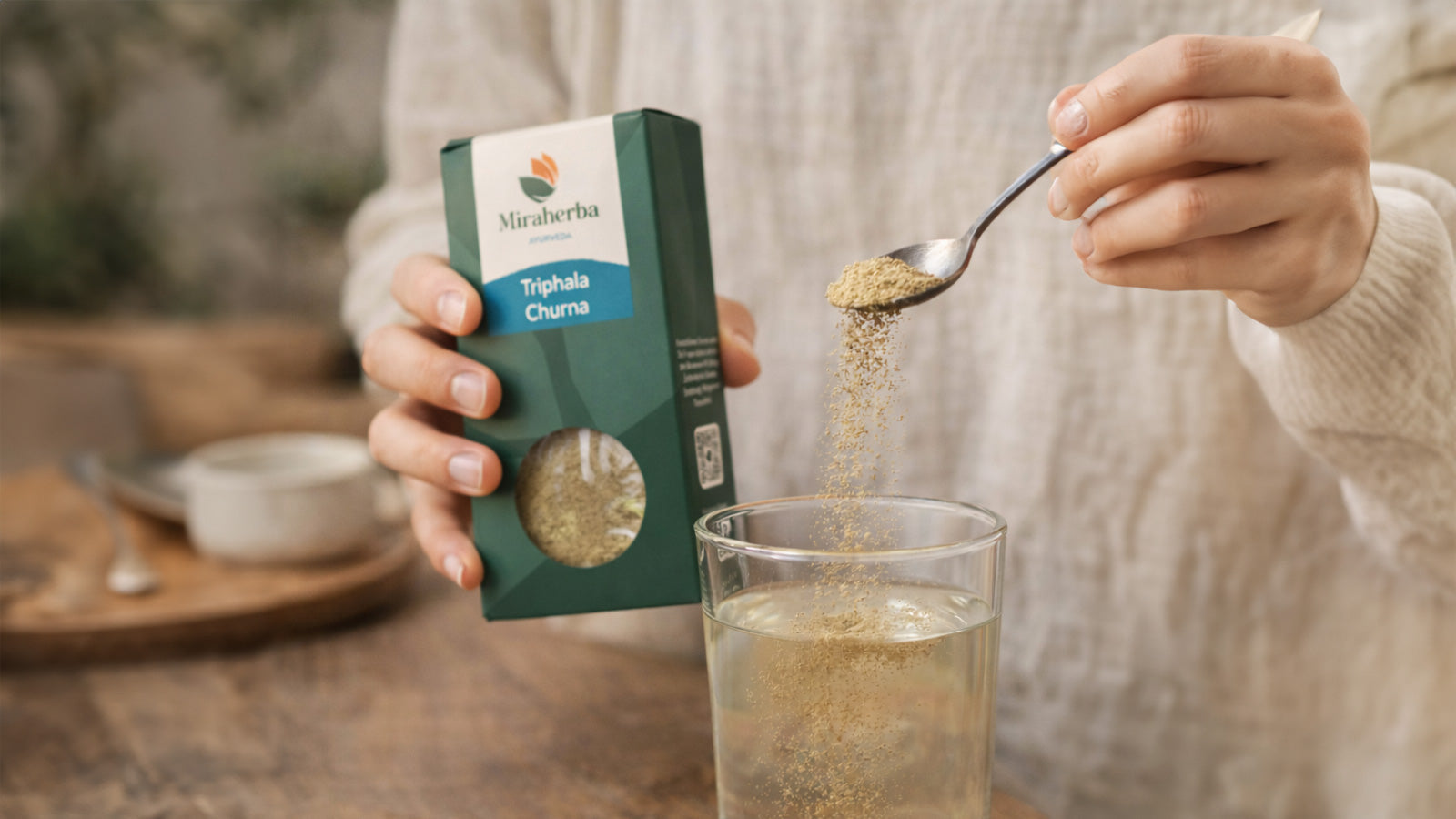
Triphala is one of the best-known and most frequently used formulations in Ayurveda, the traditional medical system of India. This unique blend consists of three fruits: Amalaki, Bibhitaki, and Haritaki. Triphala has been valued for centuries and is considered a versatile remedy to support health and wellbeing. It is often used as a daily dietary supplement to detoxify the body, promote digestion, and strengthen the immune system. The Bottom Line Triphala is a blend of three fruits: Amalaki, Bibhitaki, and Haritaki. In Ayurveda, it is used to promote digestion, detoxification, and immune system strengthening. Triphala is available as powder, tablet, or in liquid form. The formula is traditionally used to support balance of the Doshas in the body. It is important to discuss Triphala with an Ayurveda expert or doctor. The Origins of Triphala Triphala has its origins in the Ayurvedic tradition of India, which was developed over 5,000 years ago. The term "Triphala" is composed of the Sanskrit words "Tri" (three) and "Phala" (fruit). The three fruits contained in Triphala come from trees native to various regions of India. Amalaki (Emblica Officinalis), also known as Indian gooseberry, is rich in vitamin C and antioxidants. Bibhitaki (Terminalia bellirica) is valued in Ayurvedic medicine for its cleansing properties, while Haritaki (Terminalia chebula) is referred to as the "king of medicines" and offers a multitude of health benefits. Effects of Triphala in Ayurveda In Ayurveda, Triphala is considered a Rasayana, meaning it possesses rejuvenating properties. It is used to bring the three Doshas – Vata, Pitta, and Kapha – into balance. Triphala is known for its ability to support digestion and promote intestinal health, which is essential for overall health. The antioxidant properties of Triphala help protect the body from free radicals. Furthermore, Triphala is used to support liver detoxification, improve blood circulation, and strengthen the immune system. Practical Application of Triphala Triphala can be consumed in various ways. It is available as powder, tablet, or in liquid form. Traditionally, Triphala powder is dissolved in warm water and taken before bedtime to support digestion overnight. Some people prefer to take Triphala tablets as they are easier to dose. If you wish to use Triphala, it is advisable to start with a small dose and gradually increase it while observing your body's response. It is important to pay attention to product quality and preferably choose organic Triphala to achieve the best results. Frequently Asked Questions Can everyone take Triphala? Triphala is generally safe for most people. However, pregnant women, nursing mothers, and people with specific health conditions should consult a doctor or Ayurveda expert before taking it. How long can you take Triphala? Triphala can be taken long-term, however use should be reviewed regularly, especially if consumed over an extended period. If unsure, consult a professional. Are there side effects when taking Triphala? Triphala is generally well tolerated, however some people may experience mild stomach discomfort, especially at higher doses. If side effects occur, the dose should be reduced or intake discontinued. Conclusion Triphala is a versatile and proven Ayurvedic formula that can provide numerous health benefits. It supports digestion, promotes detoxification, and strengthens the immune system, making it a valuable part of a healthy lifestyle. When using Triphala, it is important to pay attention to product quality and discuss use with an Ayurveda expert or doctor to achieve the best possible results.
Learn more
Tamarind Chutney with Mango
Tamarind is an ingredient known in Ayurvedic cuisine for its cooling properties. It helps reduce excess heat in the body, which is particularly beneficial for the Pitta Dosha.
Learn more
Kerala Chicken Curry
This dish comes from the southern Indian region of Kerala, known for its aromatic and rich curries. The use of chicken provides a good source of protein, while fresh spices such as curry leaves and turmeric not only intensify the flavor but are also known for their anti-inflammatory properties.
Learn more
Amaranth-Fig Laddu
Amaranth, an ancient grain from Central and South America, is known for its high protein and mineral content. It is an excellent source of iron and magnesium, making it ideal for a nutrient-rich diet. Amaranth has a grounding and calming effect, which is particularly beneficial for the Vata Dosha, which is often characterized by restlessness and dryness.
Learn more
Spicy Cucumber-Lime Lassi
The Spicy Cucumber-Lime Lassi is a refreshing beverage with roots in traditional Indian cuisine. The main ingredient, cucumber, is known for its cooling properties, which are particularly soothing in summer.
Learn more
Always Tired? Ayurveda Explains Why Sleep Alone Isn't Enough
Always tired even though you got enough sleep? In Ayurveda, the cause often lies not in sleep – but in digestion, the nervous system, and the inner balance of the Doshas.
Learn more